absinthe spoon
Finding What Percentage is Absinthe?
Absinthe is really a strong anise flavor liquor which happens to be produced by distilling alcohol with herbs for instance wormwood, aniseed and also fennel https://absinthekit.com. We all know it is actually strong and will enable you to get drunk very easily, but what percentage is Absinthe and what is its proof?
Let’s look at the alcohol by volume levels of favorite brands of Absinthe:-
La Fee XS Absinthe Francaise 68% abv (136 proof)
Doubs Mystique Carte D’Or 65% abv (130 proof)
La Clandestine Absinthe 53% abv (106 proof)
Jade Edouard 72% abv (144 proof)
Sebor 55% abv (110 proof)
Jade Nouvelle Orleans 68% abv (136 proof)
Mari Mayans Collectors 70 70% abv (140 proof)
La Fee Parisian 68% abv (136 proof)
Lucid Absinthe 62% abv (124 proof)
Jade Verte Suisse 65% abv (130 proof)
Pernod Absinthe 68% abv (136 proof)
Kubler 53 53% abv (106 proof)
Pere Kermanns 60% abv (120 proof)
Jade PF 1901 68% abv (136 proof)
La Fee XS Absinthe Suisse 53% abv (106 proof)
Roquette 1797 75% abv (150 proof)
La Fee Bohemian 70% abv (140 proof)
Let’s now compare and contrast Absinthe to other beverages:-
Whisky – Johnnie Walker Black Label Scotch 40% alcohol by volume (80 proof)
Absinthe might be around 75% alcohol by volume (150 proof)
Table Wine 9-12% alcohol by volume (18-24 proof)
Beer is commonly 4 or 5% alcohol by volume (8-10 proof)
Today, the alcohol-information.com website has worked out that whenever you may have one shot of 190 proof Everclear is the same as drinking 2.85 bottles of beer and about 3 brandies. With this information we could establish that one shot of Absinthe matches 2.25 bottles of beer. Hence, the 22 shots Absinthe comes to 49.5 bottles of beer!
As we discussed, Absinthe is a lot stronger than sorts of fermented drinks for instance wine and beer perhaps even more powerful than whisky. We therefore have to be careful when consuming Absinthe, not mainly because it will make us have hallucinations, and also other psychedelic effects, but as it’s so strong and definitely will intoxicate swiftly. We have to take certain care when mixing Absinthe with other alcoholic drinks in cocktails.
Care ought to be taken when coming up with your own personal homemade Absinthe drink. If you purchase an Absinthe kit from someone like Green Devil then you’re simply steeping herbs in a neutral alcohol like Everclear or vodka. Now, Everclear has an abv of 95% as well as a proof of 190 so it is much stronger than commercial Absinthe. Absinthe essences from AbsintheKit.com must also be mixed with a neutral alcohol like Everclear or vodka. Your finished Absinthe is going to be whatever the proof or abv of the neutral alcohol you could have used.
What percentage is in Absinthe? For commercial Absinthe just look around the bottle label or, if you’re ordering online, go through the product details for abv or proof. Should you be making your own personal Absinthe coming from a kit, you should look at the bottle of Everclear or vodka that you’ll be using.
Finding out How To Drink Absinthe
If you want to recognize how to drink Absinthe first you need to be aware what Absinthe is absinthekit.com. Absinthe is a mysterious and mythical distilled liquor created from an alcohol base, just like wine, and flavored with herbs including common wormwood (artemisia absinthium), fennel and aniseed. It has an anise flavor and is usually green in color, although La Bleue styles are clear.
Absinthe is quite strong, up to 75% ABV and approximately two times as strong as spirits like vodka or whisky. It was famously restricted in the early 1900s due to its thujone content. Thujone, in wormwood, was believed to be like THC in cannabis, also to be psychoactive and cause psychedelic effects 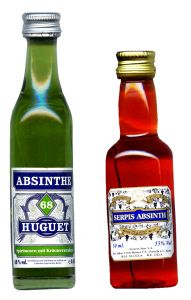 . It’s now known that Absinthe only contains really small amounts of thujone and is also perfectly safe to drink in moderation.
Absinthe supporters consist of Van Gogh, Degas, Gauguin, Oscar Wilde and Ernest Hemingway who famously developed an Absinthe cocktail called “Death in the Afternoon” – a variety of Absinthe and champagne. Henri de Toulouse-Lautrec, it’s claimed, drank a “Tremblement de Terre” (Earthquake) which was 1 part Absinthe combined with 1 part cognac!
How to Drink Absinthe in your own home
In Absinthe bars your Absinthe will likely be prepared for you and your waiter could use an Absinthe fountain to get ready your drink, but you would want to know how to prepare your own Absinthe from home.
Firstly, you will need to purchase a quality Absinthe. Here are some tips and some help for buying a decent Absinthe:-
– Look online or in a liquor shop for Absinthes that contain real wormwood and have a thujone content. Wormwood gives Absinthe its attribute bitter taste. Absinthe just is not Absinthe with out wormwood, but there are numerous Absinthe substitutes or fake Absinthes that do not consist of wormwood or consist of southernwood as an alternative.
– If the Absinthe lists its herbal ingredients, try to find the components aniseed and fennel, aside from the wormwood, and other herbs such as lemon balm, star anise, angelica, hyssop and dittany.
– Consider the ABV (alcohol by volume). It should be between 45 and 75%.
– Make your own real Absinthe from essences. These distilled herbal Absinthe essences can be obtained from AbsintheKit.com who present essences to Absinthe distilleries. The essences consist of wormwood and are easy to use – simply mix with a neutral alcohol base just like Everclear or vodka. A very economical approach to make real Absinthe.
When you have your Absinthe you will have to use “The Ritual” (the name for the art of creating a good Absinthe) to make your Absinthe for drinking. To arrange your Absinthe you will need:-
– Absinthe
– An Absinthe glass
– A slotted Absinthe spoon
– A sugar cube
– Ice cold water
Pour 25-50ml of Absinthe into the glass and rest the Absinthe spoon above the top of the glass. Place a sugar cube on the spoon and either use an Absinthe fountain to drip the iced water on the sugar cube or use a steady hand to slowly pour or drip the water over. As the sugar and water solution combines in the Absinthe, the essential oils inside the herbs will split, since they’re not water soluble, and may cause the drink to louche, or go cloudy. This louching is the wanted effect and if your Absinthe doesn’t louche then you have not got a top-quality Absinthe.
The ratio of water to Absinthe ought to be between 3:1 and 5:1 according to your taste. Stir the drink when all of the water has been added and sit back and relish the experience.
These instructions on how to drink Absinthe will help you to make the perfect Absinthe every time.
Related to Absinthe
Absinthe the legendary alcoholic beverage of nineteenth century Paris is generating a stunning comeback and it is not surprising that people would like to know all they can about absinthe https://absinthekit.com. Absinthe has got the distinction of getting many nicknames it had been called the “Green Fairy”, “Green Muse”, and also the “Green Goddess”. What adds to its mystique and aura is its fascinating background and romantic connections to the nineteenth century art scene of Europe. Absinthe’s supposed unique effects as well as its great taste can also be responsible for a growing number of pleasure seekers wondering a little more about absinthe.
Dr. Pierre Ordinaire a French doctor is credited with creating absinthe the very first time during his live in Switzerland. The great doctor wanted to develop a digestive tonic to treat stomach ailments using wormwood (Artemisia absinthium)  . Wormwood was famous for its healing and curative properties for thousands of years. The digestive tonic prepared by the good doctor had large alcohol content and an anise flavor.
Around 1797 Major Dubied realized the chance of absinthe as a possible alcoholic drink and paid for absinthe recipe from Dr. Ordinaire. Major Dubied then begun commercial manufacture of absinthe liquor together with his son-in-law Henri Louis Pernod in the Val de Travers region of Switzerland. Absinthe was starting to be approved by people favorably and so Pernod moved production into a bigger facility in Pontarlier, France. Initially the Pernod Fils distillery distilled only 16 liters of absinthe each day but as absinthe’s recognition grew they were shortly distilling around 400 liters of absinthe per day. Absinthe popularity was on a constant ascendance and by the end of nineteenth century, France alone used up more than two million liters of absinthe per year.
France was one place in which absinthe’s attractiveness was the highest also it was loved by both the upper class and the common public. The bohemian culture of nineteenth century France embraced absinthe and plenty an excellent painters, writers and intellectuals routinely reached out to get a glass of the green fairy. Some prominent names included Vincent Van Gogh, and Pablo Picasso. By 1870 absinthe popularity was at an all time high and it was common for individuals to start their day having a glass of absinthe and end their day with over one glass of absinthe. Absinthe introduced an exceptional democratization of European society; it was liked by bankers, musicians, butchers, laborers, artists and females. Absinthe drink was put together utilizing an elaborate routine and specific absinthe spoons, absinthe glasses, absinthe fountains were utilized in this ritual.
The astonishing recognition enjoyed by absinthe ultimately caused its downfall. The temperance movement plus the anti alcohol lobby pressed hard for its ban. Absinthe was held responsible for “absinthism” a mental condition characterized by violent behaviour and madness. The wine industry of nineteenth century, already reeling on account of absinthe’s popularity, supported the ban calls and lobbied hard with several governments in Europe. At the end of the first decade of the twentieth century most countries in Western Europe had prohibited absinthe. Only Spain, the Czech lands (Bohemia, Czech Silesia, and Moravia) and the UK did not ban absinthe.
Absinthe continued to be banned in the US as well as some Countries in europe for most of the twentieth century; nonetheless, in the light of new discoveries after last century that conclusively proved that absinthe did not contain harmful amounts of mind bending substances like thujone, most countries legalized absinthe once again.
Unfortunately, absinthe continues to be considered illegal in the United States; only a watered down version of absinthe is allowed to be produced traded in the usa. The good thing is that US citizens can still buy absinthe online from non-US producers or better still order absinthe kits and absinthe essence and make their particular absinthe from home. These absinthe essences are created using traditional absinthe recipes. 20 ml of absinthe essence is combined with 730 ml of vodka or Everclear or any other neutral spirit to ready 750 ml of absinthe.
There are several websites from which you can order your absinthe, absinthe kits, absinthe essence and various absinthe accessories. The most trusted and reputed name is absinthekit.com. Absinthekit.com offers some of the finest deals available online for several forms of real absinthe essence, as well as other absinthe accessories.
The New Absinthe Thujone
Absinthe thujone is the chemical found in Absinthe’s vital ingredient, the plant known as Common Wormwood, or Artemisia Absinthium to give it its botanical name. The substance thujone was partly responsible for Absinthe being banned in the early 1900s in several countries across the world and thujone is still tightly regulated today https://absinthesupreme.com, especially in the United States (or states united).
Thujone was considered to be just like THC seen in cannabis and Absinthe was alleged to be psychoactive and have psychedelic effects causing hallucinations and insanity. Absinthe was popular with the Bohemian set in Montmartre in Paris and several artists and writers believed that Absinthe, the Green Fairy, gave them inspiration as well as their genius. Famous Absinthe drinkers include Oscar Wilde, Ernest Hemingway, Van Gogh, Gauguin, Degas, Baudelaire and Verlaine. Some say that Van Gogh’s madness was caused by Absinthe and that he cut off his ear under its effect  . Absinthe was even blamed for a man murdering his family, although he had used many other strong alcoholic drinks following the Absinthe.
Prohibition campaigners used news of the murder to campaign for the suspending of Absinthe and blamed France’s growing problems of alcoholism on the emerald liquor.
Is Absinthe Thujone Hazardous?
Today’s studies suggest that it was actually the alcohol (ethanol) content of Absinthe which was dangerous instead of the thujone. Absinthe is twice as strong as spirits like whisky and vodka and can be 75% alcohol. Care should therefore be taken when ingesting Absinthe. Thujone is simply found in minute quantities and should therefore cause no major negative effects or health issues. The EU stipulates that alcohol based drinks with an ABV (alcohol by volume) level over 25% might only contain a maximum of 10mg/kg of thujone, beverages classed as “bitters” can contain approximately 35mg/kg, it is not completely clear which class Absinthe suits but many brands of Absinthe have much less than 35mg with a lot of being under 10mg/kg. In the US it is simply legal to get or sell Absinthes with trace quantities of thujone.
High doses of thujone may be dangerous causing convulsions but you would need to drink a substantial amount of Absinthe to consume that amount of thujone and it will be impossible to drink that amount, you would be comatosed from alcohol until then!
Absinthe Ingredients
It is said that Henri-Louis Pernod, who owned the first Absinthe distillery, used the herbs wormwood, aniseed, fennel, lemon balm, hyssop, angelica root, dittany, star anise, nutmeg, juniper and veronica to create his famous Pernod Absinthe. The essential oil from these herbs is mainly responsible for La Louche, the clouding which occurs when water is put into Absinthe. These herbs particularly the aniseed and anise are responsible for the distinctive aniseed or licorice taste of Absinthe and wormwood is mainly responsible for the bitter flavor. Absinthe is usually used as bitters in cocktails.
There are lots of brands of Absinthe or Absinthe substitutes that have been developed in the ban and so contain no Absinthe thujone or wormwood, but many would state that Absinthe just isn’t Absinthe without Absinthe thujone and the bitter taste of wormwood. If you’d like real Absinthe look for brands that contains wormwood or Absinthe thujone.
The Absinthe United States Predicament
Absinthe thujone is the chemical seen in Absinthe’s vital ingredient, the plant called Common Wormwood, or Artemisia Absinthium to give it its botanical name. The compound thujone was partly responsible for Absinthe being banned during the early 1900s in many countries across the world and thujone continues to be tightly regulated today, particularly in the United States (or states united).
Thujone was thought to be just like THC present in cannabis and Absinthe was alleged to be psychoactive and have psychedelic effects triggering hallucinations and insanity. Absinthe was popular with the Bohemian set in Montmartre in Paris and several artists and writers claimed that Absinthe, the Green Fairy, gave them inspiration in addition to their genius. Well-known Absinthe drinkers include Oscar Wilde, Ernest Hemingway, Van Gogh, Gauguin, Degas, Baudelaire and Verlaine. Some claim that Van Gogh’s madness was caused by Absinthe and that he cut off his ear under its effect alcoholplant. Absinthe was even blamed for a man murdering his family, despite the fact that he had consumed many other strong alcoholic drinks right after the Absinthe.
Prohibition campaigners used news of the murder to campaign for the suspending of Absinthe and blamed France’s growing problems of alcohol addiction on the emerald liquor.
Is Absinthe Thujone Dangerous?
Today’s research suggests that it was actually the alcohol (ethanol) content of Absinthe that’s dangerous rather than the thujone. Absinthe is twice as strong as spirits like whisky and vodka and can be 75% alcohol. Care should therefore be used when ingesting Absinthe. Thujone is simply present in minute quantities and must therefore cause no major unwanted effects or health issues. The EU stipulates that alcoholic beverages with an ABV (alcohol by volume) level over 25% may only contain a maximum of 10mg/kg of thujone, beverages classed as “bitters” can contain as much as 35mg/kg, it isn’t totally clear which class Absinthe fits into but many brands of Absinthe have much less than 35mg with a lot of being under 10mg/kg. In the US it is simply legal to purchase or sell Absinthes with trace amounts of thujone.
High doses of thujone could be dangerous triggering convulsions nevertheless you would have to drink a great deal of Absinthe to consume that amount of thujone and it would be impossible to drink that amount, you’d be comatosed from alcohol until then!
Absinthe Materials
It is known that Henri-Louis Pernod, who owned the first Absinthe distillery, utilized the herbs wormwood, aniseed, fennel, lemon balm, hyssop, angelica root, dittany, star anise, nutmeg, juniper and veronica to create his famous Pernod Absinthe. The essential oil from these herbs is responsible for La Louche, the clouding which comes about when water is added to Absinthe. These herbs specially the aniseed and anise are responsible for the distinctive aniseed or licorice taste of Absinthe and wormwood is responsible for the bitter flavor. Absinthe is usually used as bitters in cocktails.
There are lots of brands of Absinthe or Absinthe substitutes that have been developed over the ban and thus contain no Absinthe thujone or wormwood, but some would say that Absinthe isn’t Absinthe without Absinthe thujone and the bitter taste of wormwood. If you’d like real Absinthe try to find brands that contains wormwood or Absinthe thujone.
Recognizing Where Do I Get Absinthe In Australia?
Absinthe became legal within Australia at the conclusion of 2000. It could be bought and sold in Australia as long as it is in accordance with government legislation https://absinthekit.com. Legislation in Australia says that bitters can contain as much as 35mg/kg of thujone and other alcohol-based drinks can contain as much as 10mg/kg of thujone. Many people have realized that it is legal and wish to try the mythical Green Fairy. “Where do I get Absinthe in Australia?” is a very typical question in this world of Absinthe revival.
Where Do I Get Absinthe In Australia?
Absinthe is accessible from many different sources:-
A neighborhood liquor shop
You ought to be able to purchase Absinthe in your local liquor store. Read labels carefully. Genuine Absinthe needs to have an alcohol by volume content which is between 50 and approximately 75% and it should contain thujone  , a compound seen in wormwood. Absinthe is manufactured in many countries around the world but countries for instance France, Switzerland, Spain (Absenta) and the Czech Republic are recognized for the quality of their Absinthes.
Australian sites
– nicks.com.au (Vintage Direct) – This company stock a selection of 22 different Absinthes from around the world. Noteworthy Absinthes on their site comprise Pernod Absinthe, Jade Verte Suisse, Kubler, La Fee Bohemian, La Ptite Douce and Mansinthe by Marilyn Manson.
– Absinthesalon.com.au – This is usually a company who specialize in selling fine Absinthes online. Absinthes available to order include Duplais Verte, La Ptite Douce, Jade Verte Suisse and also Jade Edouard, Mansinthe, Kubler plus some others. They also stock Absinthe glasses, spoons, fountains and whenever you order they send you some Absinthe chocolate truffles – yum!
– Moulin Rooz – Australia’s own top rated Absinthe can be obtained to order from tamborinemountaindistillery.com.
– eBay – eBay.com.au provides Absinthe and Absinthe accessories for sale on its site. “Absinth Shop” market many brands of Absinthe on eBay which includes King of Spirits, Fruko, Doubs and Staroplzenecky.
Websites Offering Global Shipping
If you can’t find a certain Absinthe in Australia there are sites based in other countries and you can get those Absinthe shipped from them. Companies who ship world wide include:-
– AbsintheKit.com – You can get real Absinthe essences from this company to create your own true wormwood Absinthe. Absinthe essences are very cheap – $3.95 (US dollars) and you could even buy an Absinthe Kit for $29 to create 14 bottles of Absinthe. The kit also contains a measure and 14 creative bottle labels.
– Thedrinkshop.com – This UK based company ship Absinthe around the globe and stock 32 different types.
– Absinth24.net – This manufacturer will ship Absinthes to Australia and stocks a wide variety of Absinthes. This web site lists the thujone content of the Absinthes too.
– Absintheclassics.com – This manufacturer focuses primarily on selling fine Absinthes like the Jade Collection, La Clandestine Absinthe, La Ptite, Absinthe Roquette 1797, Doubs, Duplais and many more. They’re going to ship worldwide.
– Alandia.de – Alandia stock lots of Absinthes including Doubs Mystique, Mansinthe, Alandia Epoque, Absinthe Roquette 1797, Francoise Guy, Alandia Suisse La Bleue and many more. They ship to Australia.
When you are acquiring Absinthe from another country you will have to ensure that it is legal in Australia, otherwise it might be confiscated by customs. Check thujone levels before you order. Absinthe essences don’t count as bottled Absinthe.
I hope that this information helped answer “Where do I get Absinthe in Australia?” and that you enjoy your pursuit for the excellent Green Fairy drink.
Realizing What is Absinthe alcohol?
Lots of people around the world are asking “What is Absinthe alcohol?” because we seem to be experiencing an Absinthe revival at this time. Absinthe is viewed as a classy and mysterious drink that is connected with Bohemian artists and writers absinthesupreme, films like “From Hell” and “Moulin Rouge” and celebrities such as Johnny Depp as well as Marilyn Manson. Manson has even had his very own Absinthe created called “Mansinthe”!
Van Gogh, Gauguin, Degas, Pablo Picasso, Oscar Wilde as well as Ernest Hemingway talked of Absinthe giving them their motivation and genius. They even named the Green Fairy their muse. Absinthe features in several creative works – The Absinthe drinker by Picasso, The Absinthe Drinker by Manet and L’Absinthe by Degas  . The writer Charles Baudelaire furthermore wrote about it within his poetry too. Absinthe has undoubtedly inspired great works and it has had an amazing impact on history.
What is Absinthe Alcohol?
Absinthe is usually an anise flavored, high proof alcohol. It is usually served with iced water to dilute it and to cause it to louche. Henri-Louis Pernod distilled it in the early 19th century through a wine alcohol base flavored with natural herbs and plants. Traditional herbs utilized in Absinthe production consist of wormwood, aniseed, fennel, star anise, hyssop and lemon balm, along with many more. Spanish Absenta, the Spanish term for Absinthe, is commonly a little sweeter than French or Swiss Absinthe as it utilizes a distinct kind of anise, Alicante anise.
Legend has it that Absinthe was made in the late eighteenth century by Dr Pierre Ordinaire being an elixir for his patients in Couvet, Switzerland. The recipe then got into the hands of two sisters who began selling it as a drink in the town and eventually sold it towards a Major Dubied whose daughter married into the Pernod family – the rest is, as it were, history!
By 1805, Pernod had opened a distillery in Pontarlier, France and began creating Absinthe as “Pernod Fils” and, through the middle of the nineteenth century, the Pernod company was generating over 30,000 liters of Absinthe per day! Absinthe even grew to become more well-known than wine in France.
Absinthe had its glory days throughout the Golden Age of La Belle Epoque in France. Unfortunately, it became linked to drugs such as heroin, cocain and cannabis and was accused of having psychedelic outcomes. Prohibitionists, doctors and wine suppliers, who were upset with Absinthe’s popularity, all ganged up in opposition to Absinthe and were able to encourage the French Government to exclude the beverage in 1915.
The good news is, Absinthe has since been redeemed. Studies and tests demonstrated that Absinthe is no longer harmful than any other strong liquor and therefore no cause hallucinations or harm people’s health. The statements of the early twentieth century have become thought to be mass hysteria and false information. It was legalized within the EU in 1988 and the USA have granted various brands of Absinthe to be distributed in the US since 2007.
You can read more about its background and intriguing facts on absinthebuyersguide.com as well as the Buyer’s Guide and forum at lafeeverte.net. The forum is useful as there are reviews on various Absinthes. You can aquire Absinthe essences, which make real wormwood Absinthe, in addition to replica Absinthe glasses and also spoons at AbsintheKit.com.
So, what is Absinthe alcohol? It is a mythical, mysterious drink with an incredible history.
Absinthe Information
There is certainly so much contradictory Absinthe information available on the web and in books, it’s hard to understand what to believe.
Deceptive Absinthe Information
One book “Absinthe The Cocaine of the 19th Century: A History of the Hallucinogenic Drug and its Effect on Artists and Writers in Europe and the United States” by Doris Lanier, compares Absinthe to drugs like cocaine since it was considered to be addictive absinthekit, to present feelings of euphoria, have psychedelic effects and weaken mental performance and other faculties.
Absinthe became well known at the end of the 19th century and early 20th century, a time referred to as “The Great Binge”. This has been a time in the past when lots of today’s illegal drugs like crack cocaine, morphine and heroin were created and utilized by normal everyday people for medicine, on prescription for coughs etc. as well as in drinks. Popular drinks in bars were Absinthe, Vin Maraiani (cocaine and wine) and Coca Cola (then manufactured from cocaine, wine and kola nuts). These drugs and drinks were all believed to be harmless and were widely consumed throughout Europe.
Absinthe was linked with these drugs for its popularity with Bohemian artists and writers, who liked to overindulge to help their creativity, and also the loose morals of the courtesans on the Moulin Rouge and Montmartre.
Thujone, the compound in wormwood, was likewise claimed to be psychoactive and equivalent to THC (tetrahydrocannabinol) in the drug cannabis (marijuana). Both THC and Thujone are terpenoids and so are both from essential oils but THC affects the central nervous system whereas thujone influences the GABA receptors in the brain. When wormwood is smoked as a joint or used in big amounts, it’s been known to cause effects similar to cannabis intoxication – to cause hallucinations and fantasies, to make anyone feel euphoric, to relieve pain also to work as an aphrodisiac.
Absinthe was banned together with some drugs during the early 1900s and was made illegal to buy and sell in lots of countries around the world. Now that we know that its ban was only a part of the hysteria of the time. People lumped Absinthe, the Green Fairy, in conjunction with drugs like heroin (the White Fairy), cannabis and cocaine as well as presently there are numerous people and websites who mention Absinthe in the exact same sentence as magic mushrooms, LSD, weed, cannabis and ecstasy.
Absinthe Information – What we now know
We all know that medical studies on Absinthe and wormwood in the past were not accurate and were “colored” because of the prohibition movement of that time period and also the worry that Absinthe was a drug. Recent surveys have established that Absinthe, once it is actually distilled, only contains very small amounts of thujone – insufficient to cause any harmful negative effects or hallucinations, which is simply a myth. Even tests on vintage pre ban Absinthe indicates that it hardly comprised any thujone in any way. Someone would die of alcohol poisoning a long time before suffering any unwanted side effects from thujone.
Outcomes from studies and research have triggered many countries to legalize Absinthe again therefore the Green Fairy can now be enjoyed in bars and in homes across the world.
Though it might not exactly cause you to trip or get high, it is possible to get drunk on Absinthe because of its high proof. It has twice the alcohol content of spirits like vodka or whisky so care should be taken when drinking it. Should you get drunk on Absinthe you’ll likely experience an exceptionally different intoxication than you would experience from other spirits or fermented products. Many describe it as being a “lucid” or “clear headed” kind of drunkenness. This can be explained via the mixture of herbs as well as the alcohol – a mixture of sedatives and stimulants. Many people enhance these qualities by developing cocktails containing Absinthe as well as the caffeine loaded drink Red Bull!
So, you will be disappointed if you believe many of the misleading Absinthe information and acquire Absinthe to provide vivid hallucinations. However, it’s a great tasting herbal alcoholic beverage which happens to be fun to make and it has a great anise flavor. You can even enjoy making your own personal wormwood Absinthe at home by utilizing real, top-quality Absinthe essences from AbsintheKit.com – a great and economical approach to enjoy Absinthe.
Relating to Absinthe
Absinthe the legendary alcoholic beverage of nineteenth century Paris is setting up a stunning comeback and it is hardly surprising that individuals want to know all they can about absinthe absinthe supreme. Absinthe has the distinction of getting many nicknames it had been referred to as “Green Fairy”, “Green Muse”, and also the “Green Goddess”. What adds to its mystique and aura is its fascinating history and romantic connections towards the nineteenth century art scene of Europe. Absinthe’s supposed unique effects and its great taste may also be the reason for a growing number of pleasure seekers wondering a little more about absinthe.
Dr. Pierre Ordinaire a French doctor is credited with creating absinthe the first time throughout his keep in Switzerland. The good doctor desired to produce a digestive tonic to help remedy stomach ailments using wormwood (Artemisia absinthium). Wormwood was famous for its healing and curative properties since ancient times. This enzymatic tonic prepared by the great doctor had huge alcohol content as well as an anise flavor.
Around 1797 Major Dubied realized the potential of absinthe being an alcoholic beverage and purchased absinthe recipe from Dr. Ordinaire. Major Dubied then started commercial production of absinthe liquor together with his son-in-law Henri Louis Pernod in the Val de Travers region of Switzerland. Absinthe was starting to be approved by people favorably therefore Pernod moved production into a larger facility in Pontarlier, France. Initially the Pernod Fils distillery distilled only 16 liters of absinthe per day but as absinthe’s popularity grew they were soon distilling over 400 liters of absinthe per day. Absinthe popularity was on a constant ascendance and by the conclusion of nineteenth century, France alone consumed greater than 2 million liters of absinthe a year.
France was one place where absinthe’s level of popularity was the greatest and it was loved by both equally the aristocracy as well as the typical public. The bohemian tradition of nineteenth century France embraced absinthe and lots of an excellent painters, writers and intellectuals regularly reached out to get a glass of the green fairy. Some well known names included Vincent Van Gogh, and Pablo Picasso. By 1870 absinthe popularity was at an all time high and it was common for individuals to get started on their day with a glass of absinthe and end their day with over one glass of absinthe. Absinthe created a unique democratization of European society; it was adored by bankers, musicians, butchers, laborers, artists and women. Absinthe drink was prepared getting an elaborate ritual and special absinthe spoons, absinthe glasses, absinthe fountains were set up in this ritual.
The spectacular acceptance enjoyed by absinthe ultimately caused its pitfall. The temperance movement as well as the anti alcohol lobby pressed hard for its prohibition. Absinthe was blamed for “absinthism” a mental condition characterized by violent doings and madness. The wine market of nineteenth century, already reeling on account of absinthe’s popularity, supported the ban calls and lobbied hard with a couple of governments in Europe. By the end of the first decade of the twentieth century most countries in Western Europe had restricted absinthe. Only Spain, the Czech lands (Bohemia, Czech Silesia, and Moravia) and the Great britain didn’t ban absinthe.
Absinthe remained banned in the United States and many European countries for most of the twentieth century; nonetheless, within the light of new discoveries at the conclusion of twentieth century that conclusively proved that absinthe didn’t contain harmful quantities of mind bending chemicals like thujone, most countries legalized absinthe once again.
Unfortunately, absinthe continues to be considered illegal in america; merely a watered down version of absinthe is allowed to be manufactured traded in the usa. The good news is that US residents can still buy absinthe online from non-US producers or better still order absinthe kits and absinthe essence and work out their own personal absinthe in the home. These absinthe essences are produced using traditional absinthe recipes. 20 ml of absinthe essence is blended with 730 ml of vodka or Everclear as well as other neutral spirit to make 750 ml of absinthe.
There are various websites from which you can order your absinthe, absinthe kits, absinthe essence and various absinthe accessories. Probably the most trusted and reputed name is absinthekit.com. Absinthekit.com offers the best deals on the net for a few forms of real absinthe essence, and other absinthe accessories.
The Fresh Absinthe Thujone
Absinthe thujone is the chemical found in Absinthe’s vital ingredient, the plant identified as Common Wormwood, or Artemisia Absinthium to give it its botanical name www.absinthekit.com/articles. The chemical thujone was partly the cause of Absinthe being banned in early 1900s in many countries around the world and thujone continues to be tightly regulated today, especially in the United States (or states united).
Thujone was regarded as just like THC present in cannabis and Absinthe was speculated to be psychoactive and have psychedelic effects producing hallucinations and insanity. Absinthe was well-liked by the Bohemian set in Montmartre in Paris and many artists and writers believed that Absinthe, the Green Fairy, gave them inspiration as well as their genius. Renowned Absinthe drinkers include Oscar Wilde, Ernest Hemingway, Van Gogh, Gauguin, Degas, Baudelaire and Verlaine. Some say that Van Gogh’s madness was due to Absinthe and that he cut off his ear under its influence. Absinthe was even held accountable for a man murdering his family, even though he had ingested many other strong alcoholic drinks right after the Absinthe.
Prohibition campaigners used news of the murder to campaign for the banning of Absinthe and blamed France’s growing problems of alcohol addiction on the emerald liquor.
Is Absinthe Thujone Unsafe?
Today’s studies suggest that it was in fact the alcohol (ethanol) content of Absinthe that was dangerous rather than the thujone. Absinthe is doubly strong as spirits like whisky and vodka and can be 75% alcohol. Care should therefore be used when taking in Absinthe. Thujone is simply present in minute quantities and ought to therefore cause no major negative effects or health issues. The EU stipulates that alcohol based drinks with an ABV (alcohol by volume) level over 25% might only consist of a maximum of 10mg/kg of thujone, beverages classed as “bitters” can contain as much as 35mg/kg, it isn’t totally clear which class Absinthe suits but many brands of Absinthe have much less than 35mg with a lot of being under 10mg/kg. In the US it is simply legal to purchase or sell Absinthes with trace amounts of thujone.
High doses of thujone can be dangerous leading to convulsions however you will have to drink a substantial amount of Absinthe to consume that quantity of thujone and it might be impossible to drink that amount, you’d be comatosed from alcohol until then!
Absinthe Components
It is known that Henri-Louis Pernod, who owned the initial Absinthe distillery, employed the herbs wormwood, aniseed, fennel, lemon balm, hyssop, angelica root, dittany, star anise, nutmeg, juniper and veronica to create his famous Pernod Absinthe. The essential oil from these herbs is mainly responsible for La Louche, the clouding which comes about when water is included with Absinthe. These herbs particularly the aniseed and anise are responsible for the distinctive aniseed or licorice taste of Absinthe and wormwood is mainly responsible for the bitter flavor. Absinthe is oftentimes used as bitters in cocktails.
There are lots of brands of Absinthe or Absinthe substitutes that have been developed over the ban and therefore contain no Absinthe thujone or wormwood, but many would state that Absinthe isn’t Absinthe without Absinthe thujone and the bitter taste of wormwood. If you want real Absinthe search for brands containing wormwood or Absinthe thujone.